

Board games occupy a unique position amongst archaeological finds. This is because they provide direct evidence of human interaction in the past. Some board games have not survived because they were often made from materials that have deteriorated over time. Others, however, can still be studied today because they have been carved into durable surfaces made of stone or brick. By documenting these game boards, we can cast new light on the role of games in the social lives of medieval Dalmatia and demonstrate the centrality of gaming as an activity which brought people together in the past.
In the Mediterranean region, we observe a frequent occurrence of board games in the vicinity of medieval sacred buildings. Engraved or painted board games have been found in and around medieval churches in what is now Spain, Italy and Croatia.
An international research team – comprising the Institute of Archaeology of the Slovak Academy of Sciences (Branislav Kovár, Anton Arpáš), the Trogir City Museum (Lujana Paraman, Aleksandra Matura) and the University of Reading (Summer Courts, Tim Penn) – focused on researching board games in the Croatian coastal town of Trogir. The research was carried out with the support of the aforementioned institutions and the COST Action CA22145 – GameTable project.
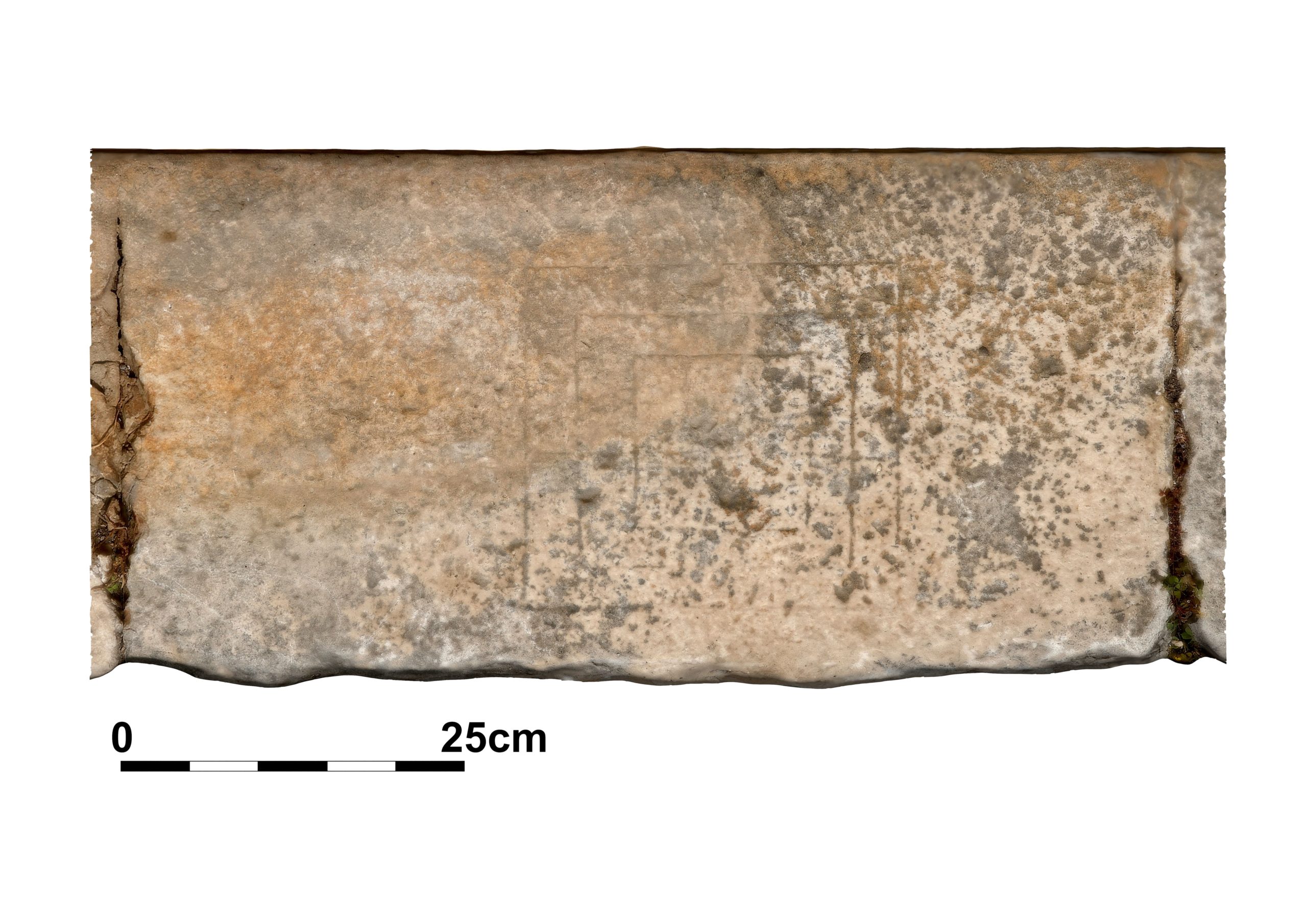
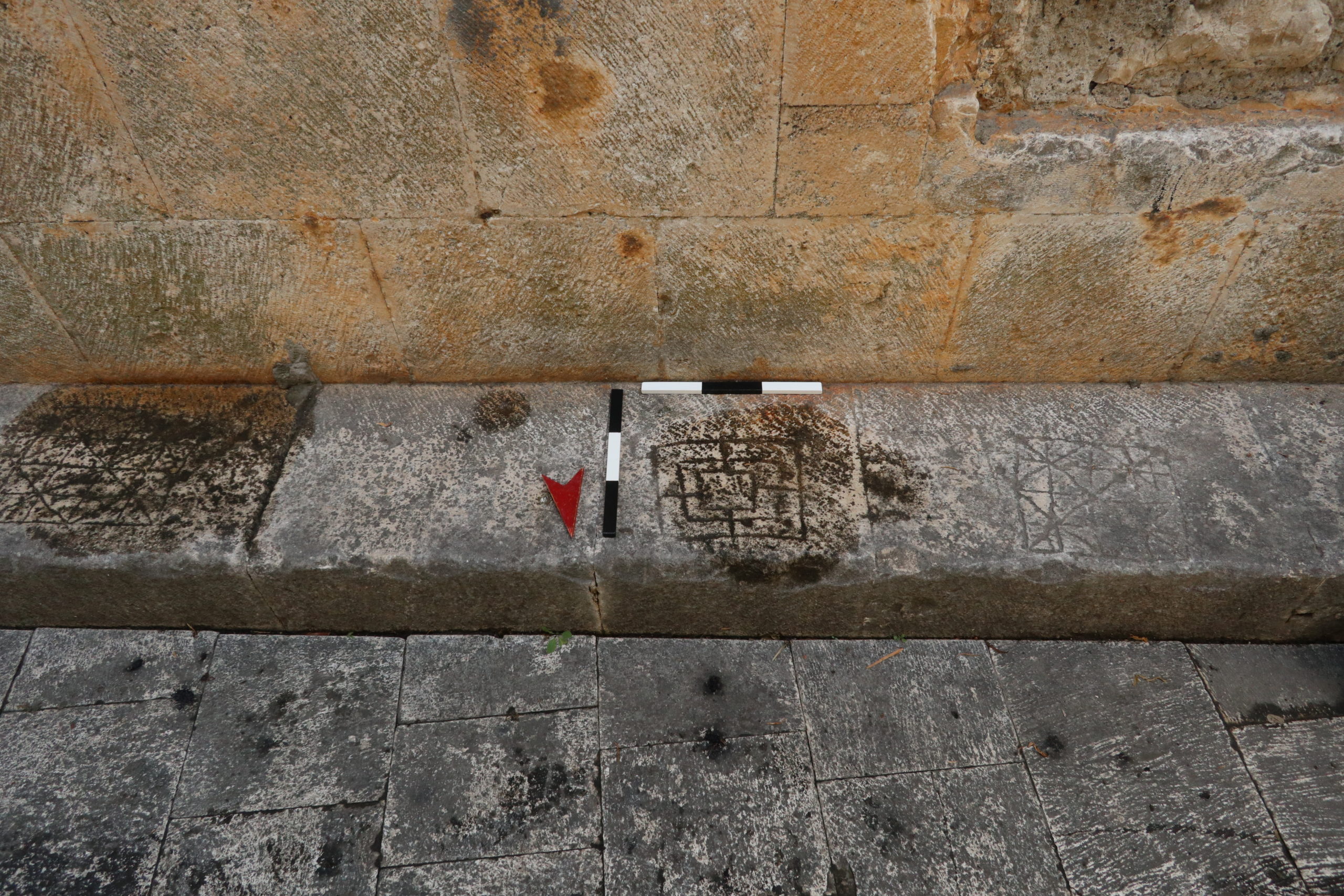
We identified the games in Trogir at two churches – at the Church of St John the Baptist and inside (and outside) St Lawrence’s Cathedral. Both were newly built during the city’s renewal in the 13th century, upon the foundations of older, Early-Christan basilicas – the one built in the early 5th century and dedicated to St Lawrence becoming a seat of the Diocese of Trogir already by the late 10th century. Both monuments are situated in the central part of the historic centre of Trogir, framing the northeastern and southeastern corners of the city square. The presence of gameboards in these public spaces confirms the stipulations of the Statute of Trogir of 1322 (book 2, chapter 29), which permitted gaming in public squares, but also tells us that games were so widely played that they spilled out of permitted public squares and into the churches themselves. Games were clearly very important in medieval Trogir.
Games discovered
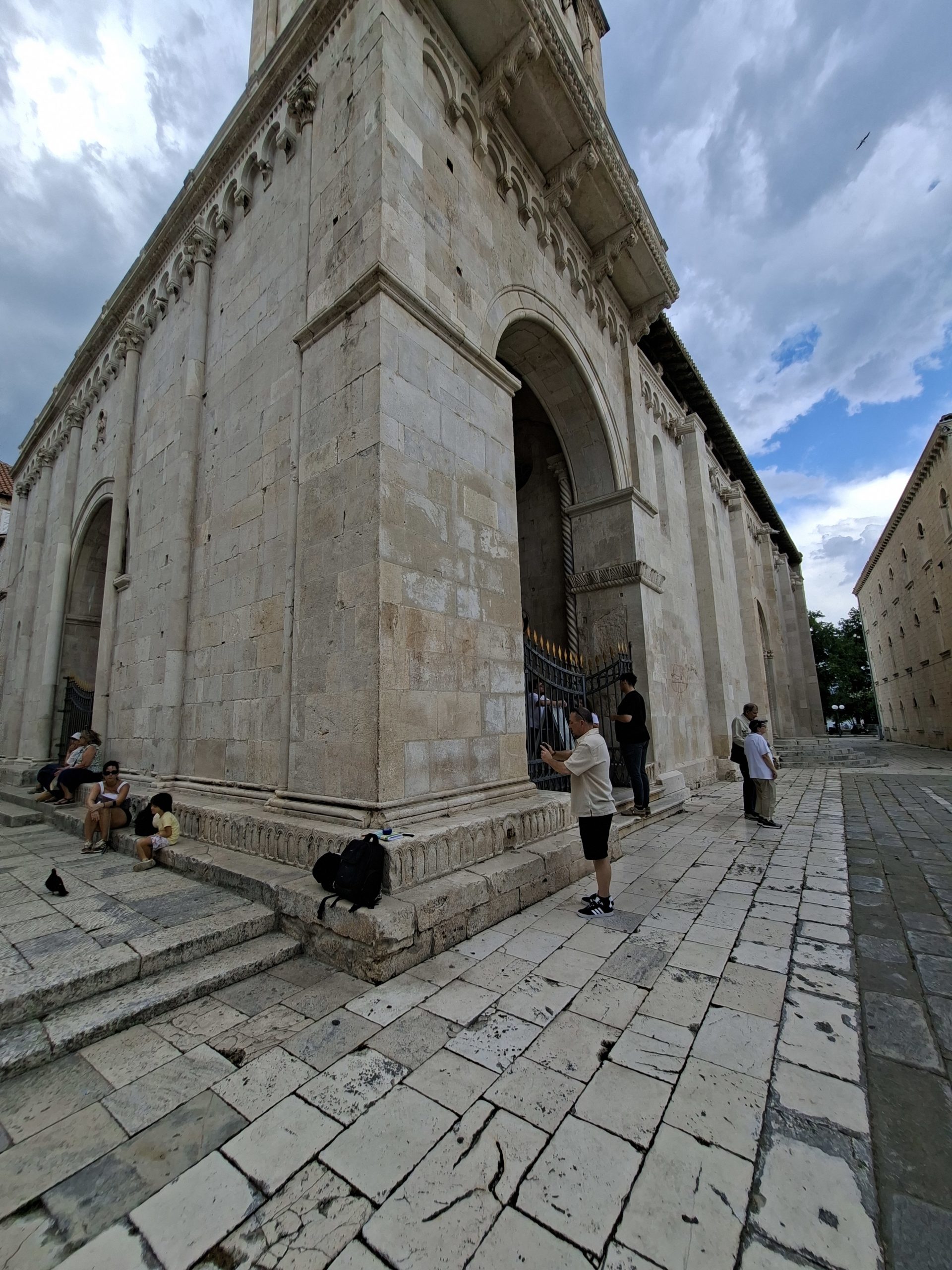
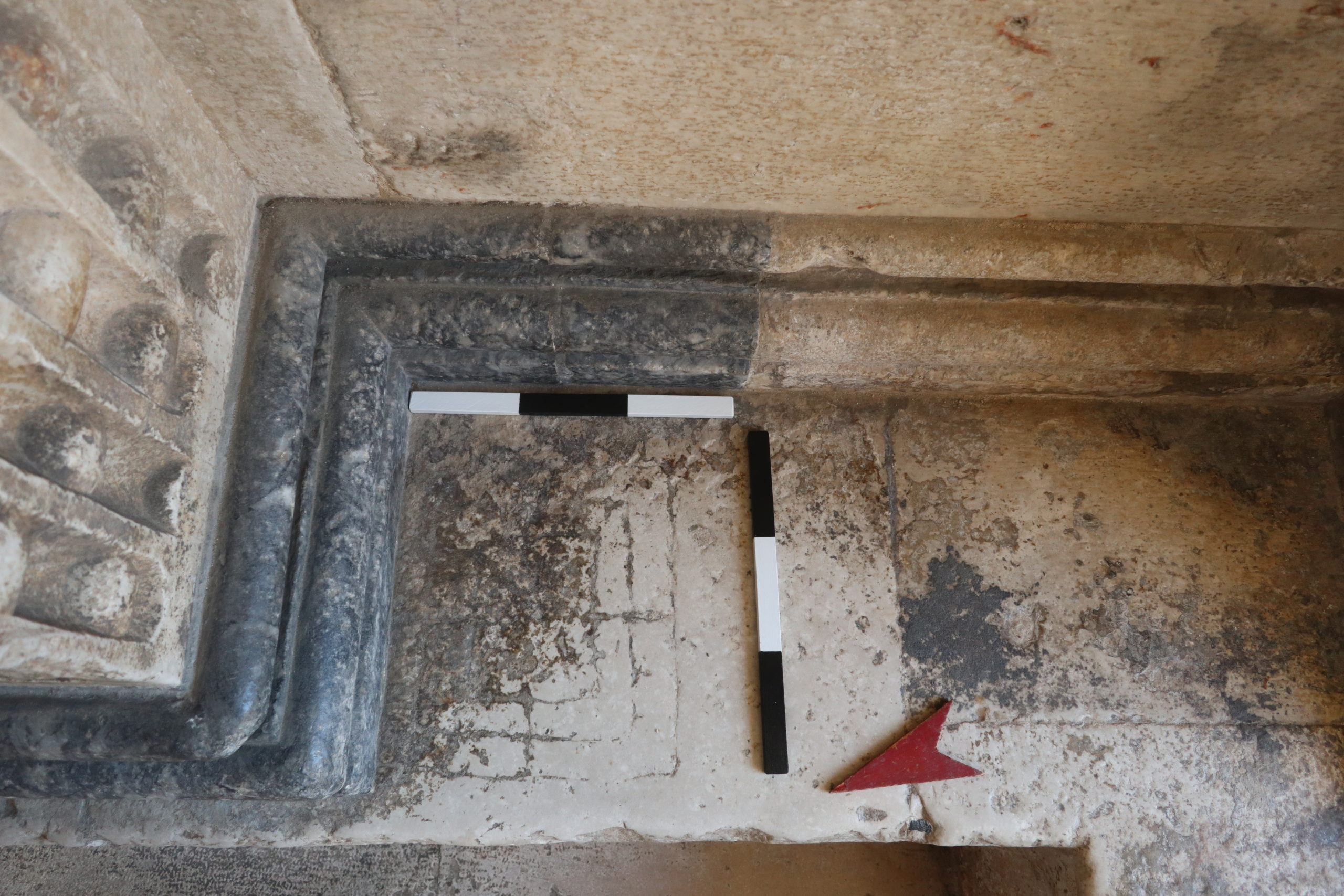
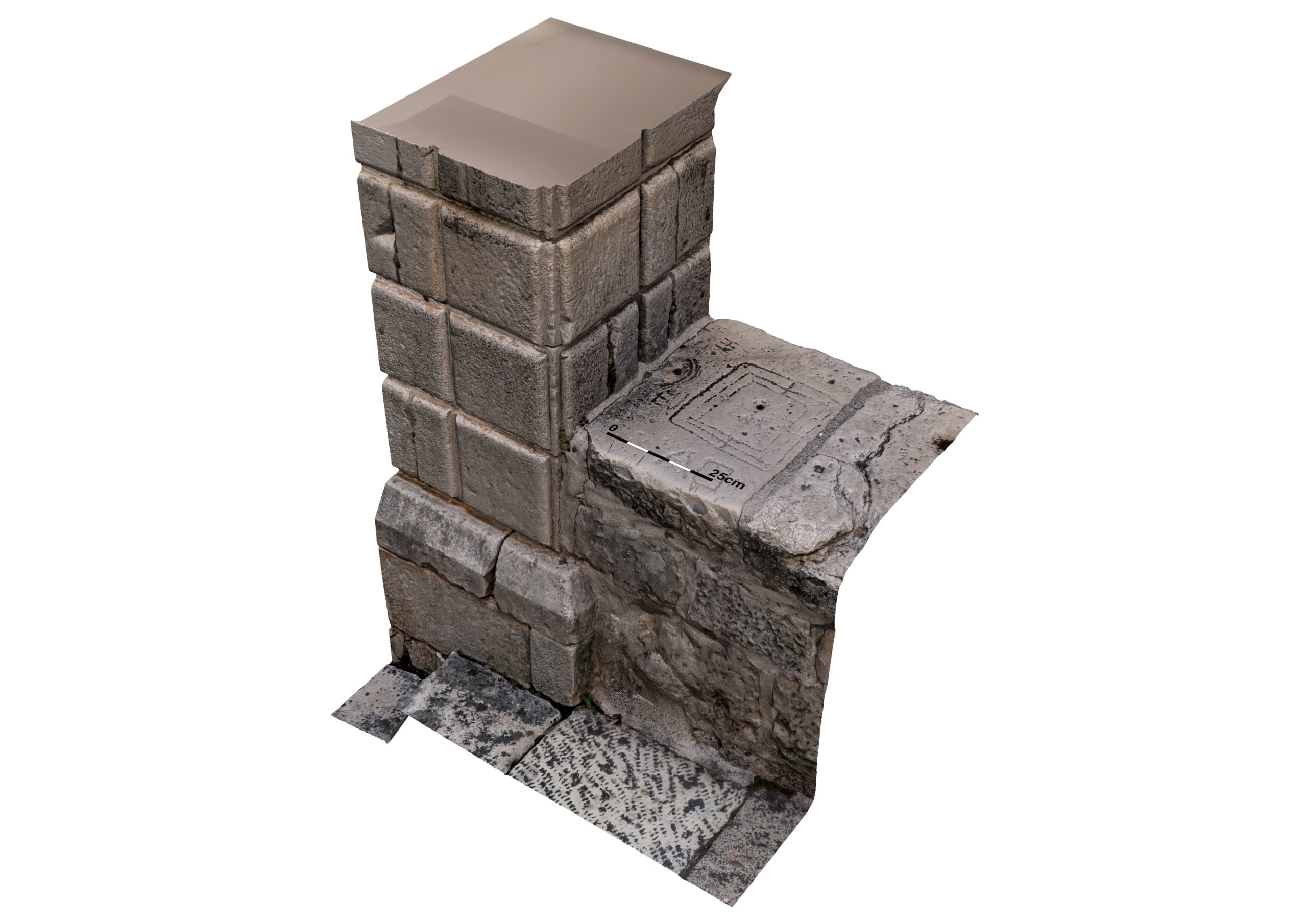
A total of 32 gameboards were found in and around St Lawrence’s Cathedral. Most were carved into a low wall next to the cathedral, on the steps, or on plinths. Game boards for nine men’s morris, alquerque, or chess/checkers were found. As some of the games were covered by later architectural features, we can date these games to the 13th century; however, in other cases, we cannot rule out earlier or later periods. According to oral history, at least one of the carved game boards discovered was still in use in the 20th century, and the inhabitants of Trogir played nine men’s morris (merels/the mill game) on it.
In the vicinity of the Church of St John the Baptist, we found six carved board games. Among them, we identified ‘mills’ and ‘alquerque’. We can assume that, like the church, the games may date back to the 13th century.
When documenting the board games carved into stone, we used the method of close-range photogrammetry. This is a technology which, through a specific process (individual photographs must partially overlap and a certain sequence must be followed when photographing the object), enables the (generate) 3D models of objects from captured static or aerial photographs, or a combination of both, taken with a digital camera; in this case, the board games carved into stone blocks. This method is already commonly used in the documentation of archaeological research and finds, but is not yet so widespread in the study of games.
We further processed the results obtained as part of the aforementioned COST Action CA22145 – GameTable project at the Department of Classics, the University of Reading.
The research team plans to document and analyse further game finds in the vicinity of sacred monuments in Dalmatia, Croatia; in the next phase of the research, we will probably endeavour to investigate sites such as Šibenik and Split. In addition to documenting the sites, we will also consider questions such as why the games were found near sacred buildings, what impact they had on urban planning, whether their presence reflects the character of specific historical periods, and why people played the games that have been discovered.
Branislav Kovár, Tim Penn, Summer Courts, Lujana Paraman